Have a big blank wall you need some art on but you're not sure what?  Come peruse our walls of
We're getting so much cool stuff in!  Sustainably made in the USA or fairly traded to give folks in poor
Each year, late winter, we look forward to the arrival of our azalea order.  We've bought from the same grower for
Our Winters Maker's Market January 27, 2024 was successful with 32 "makers" showing their wares and lovely music from 10-2:30. 
New things trickle in daily so there's always a new top or scarf, line of jewelry or handbag to see
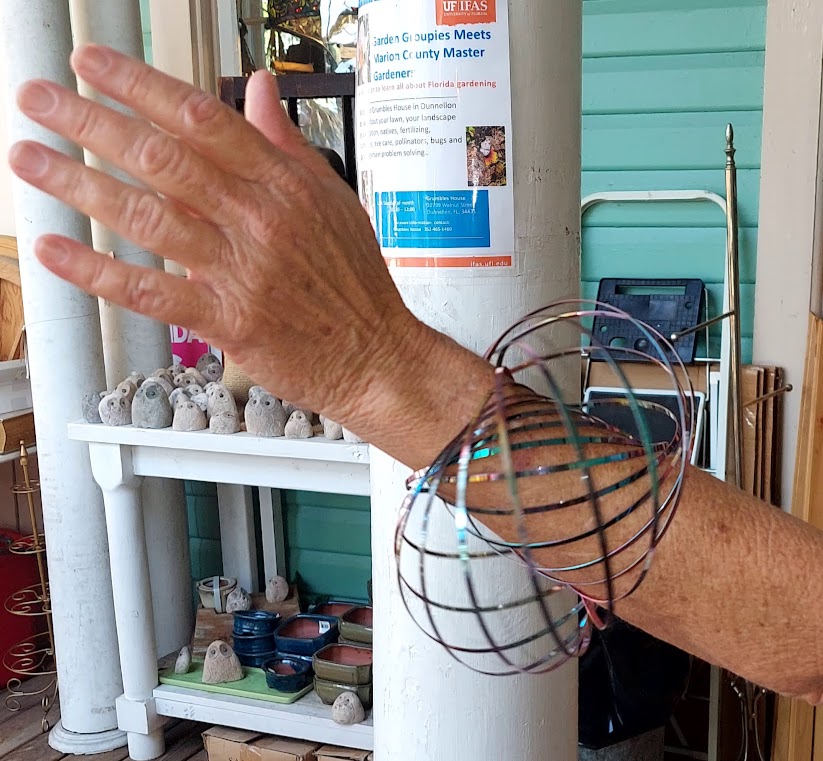
MOZI  Magic Flow Bracelet a.k.a. "arm slinkies" -  a set of carefully crafted rings which, when set in motion, mystically
House plants frequently become a bit down around us because they were not designed to live in containers. To make
You'll always find a nice selection of books, especially children's books, at Grumbles House.  We aim to educate, inspire and
If You Love Compliments, You'll Love Our Jewelry! Beautiful, Handmade Pendants & Earrings. Fine Art That You Can Wear! Picking Out Just One Is The

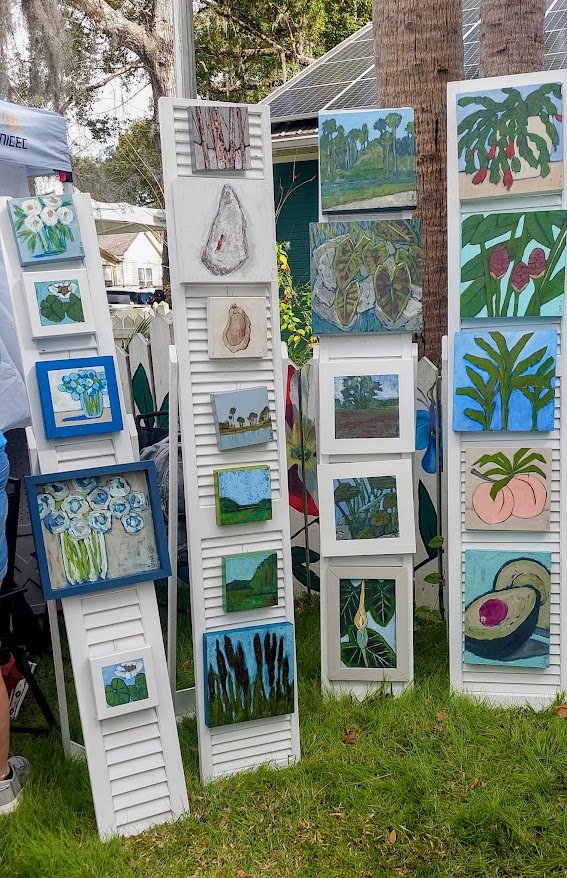
Have a big blank wall you need some art on but you’re not sure what?  Come peruse our walls of both stores, inside and out to see artistic pieces made from canvas, some SPF protected & waterproof for outdoors, stainless steel, wood, upcycled roofing metal flame chased in glorious colors and so on to give you some good ideas.  We might just have the right thing.

Content includes lots of florals, beach and river related wildlife, song verses, poetry, landscapes,  and  some local original art.

We’re getting so much cool stuff in!  Sustainably made in the USA or fairly traded to give folks in poor countries a living wage for their talent.  We hope you stop in often to see what’s new, what’s old that needs a new home and what’s on sale.

Each year, late winter, we look forward to the arrival of our azalea order.  We’ve bought from the same grower for many years who have produced top quality Azaleas for over 35 years.  If you read the information below (taken from their website with their permission), you’ll see why.  The knowledge of and attention to detail of each plant is to a level we respect and admire.  We are happy to partner with them to bring you healthy plants acclimated to our area for successful growth for many years to come.  

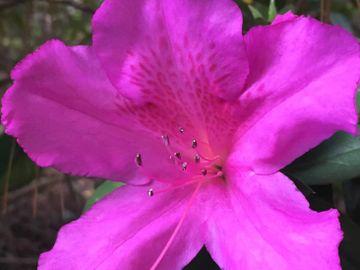
Azaleas are some of the most commonly used woody ornamental plants in the landscape from the Central Gulf coast to the Mid-Atlantic States for good reasons.  They provide excellent evergreen foliage throughout the year and a magical array of colorful flowers during the spring.  Azaleas come in many colors and varieties that can acclimate to the many different hardiness zones of the southeast.

     Azaleas prefer partial shade. Growing azaleas in the full sun is possible, but the plants will require extra attention.  When you are out in the full summer sun, you require more water and food, so do the azaleas.  This needs to be taken into consideration.  Select the right variety for the location desired.  Make sure you understand what is the mature height of the variety selected.  There is nothing wrong with planting a larger growing azalea in an area where the desired height is 4 feet but understand that it will require more radical pruning.  (Note:  Azaleas do like to be radically pruned, see section on pruning.)  – Make sure of your agricultural hardiness zone.  This information can be obtained from garden centers or your agriculture extension office.  Do not expect a plant zoned for 9b to survive the winter of zone 8a unless you are willing to protect it.   Most importantly, an adequate water source is a must.  Remember, azaleas have a shallow root system and they require more water than other woody ornamentals, especially during establishment.  (See section on water.)  

PLANTING

     Azaleas prefer a soil ph of 4.8 – 6.2, with 5.5 being ideal.  In most cases ph is rarely a problem, if the soil ph is outside these guidelines, the soil will need to be amended.  (See section discussing stress.)  Every soil situation is different.  If water drains to quickly or to slowly you might want to consider digging the hole twice the size of the root ball and adding peat moss or some kind of potting soil.  This will help the plant to establish more efficiently.  Milorganite in the hole or around the base of the plant after it is planted will also aid the plant in establishing.  Mulching is recommended to help retain moisture, reduce weeds, cool the soil, and protects the shallow roots in the summer.  Spacing.  The general guidelines for spacing are as follows:  18-24″ apart for one-gallon size plants.  36-48″ apart for 3 gallon plants.   Don’t forget the water.  

PRUNING

   Proper pruning is important to maintaining a full, vigorous azalea, which will bloom heavy in the spring.  Improper or no pruning is usually the culprit for ugly azaleas.  Azaleas should be, and like to be, “hard” pruned sometime after they bloom until around the first of July.  “Hard” pruning after this time could reduce the number of blooms the following spring.  Hard pruning is defined as, trimming as many of the branches as possible, even cutting into hard wood if necessary to establish a base.  Remember, the plant has all year to grow, so cut it back far enough to avoid hard pruning after the desired time.    Long shoots of growth that stretch above the base later in the year are called “terminal” shoots.  Spot cutting “terminal” shoots can be done at anytime of the year except winter.  Spot cutting terminal growth is also important to maintaining a full plant and should be done as needed through the fall.  

WATER

   The three most important steps to having healthy azaleas is waterwater, and water!  It is impossible to have beautiful azaleas without the proper amount of water.  Lack of water is the number one reason why azaleas struggle  There are ways today to properly irrigate azaleas with little effort and without violating local water restrictions.  There are many types of low volume emitters, spray heads, and soaker hoses that work particularly well.  These methods can be used with or without an irrigation system and in many cases are not subject to local water restrictions.  With these methods there is little or no waste because they emit low volumes of water directly at the base of the plant that goes in the ground to be absorbed by the roots.  The excess goes back to where it came from with no runoff.  It is recommended that plant areas be on separate irrigation timer zones because what is enough for the grass may not be enough for the plants and vice versa.  As with all new landscape, newly planted azaleas will require more water than established ones.  Experience suggest that it takes about two years for an azalea to fully establish.  During this time, monitor your irrigation and adjust accordingly, especially during dry, hot conditions.  When it is raining turn your sprinklers off!  What a waste, and it leads to a prime environment for fungus.  Wet soil does not need to be watered!  Come on man!  With all turf and landscape you need to monitor the water and adjust as conditions dictate.  Some might say, “Oh, that’s too much work.”  Then, may I suggest concrete?   

FERTILIZER

   With so many different kinds of fertilizer on the market it is hard to make a recommendation.  Here are some guidelines that are usually effective:  Select a fertilizer with a nitrogen (N) level no higher than 12, unless the fertilizer is time-release, then you can use a fertilizer with a nitrogen level up to 18.  (In time-release fertilizers the nitrogen is released slowly over time, this greatly reduces the risk of burning.)   The phosphorous level (P) should be between 4-10, and a potassium (K) level between 8-14.  For the professional,  commercial time-release fertilizers, such as Osmocote or Harrell’s Polyon, work very well.  The homeowner should consult with your local garden centers about other time-release fertilizers that may be available.  Obviously, quality fertilizers cost more initially, but are safer, last longer, go further, and provide the plant with elements not generally available in inexpensive brands.  Cheap fertilizer is usually just that, “cheap” fertilizer.  Fertilize azaleas after the threat of the last freeze and after the spring flowering period has ended.  Frequency depends entirely upon the type of fertilizer used and weather conditions.  Experiment with the fertilizer by using the lowest recommended rate, find out what the plant likes.  You can always add more but you can’t take it away.

Common Problems

STRESS

   The most common problem that azaleas face is problems related to stress.  
Stress is usually attributed to lack of proper maintenance.  Lack of proper 
water is the most common causes of stress.  Improper fertilization, insects, 
diseases and extreme weather conditions also play a factor.  When an azalea 
is stressed the leaves usually turn yellow with the veins in the leaves stay-
ing green, this condition is called "chlorosis".  Chlorosis is sometimes miss
-diagnosed as a ph problem.  While too high or too low of a ph will cause 
chlorosis, this problem is mostly stress related.  The solution is to identify 
the cause of the stress and to change management practices.  Repeated applications 
of a nutritional spray may help restore the plant.  Nutritional sprays contain 
important minor elements, with iron being the primary element.  Also, an app-
lication of Milorganite has been proven effective in helping the plant cope with 
problems related to stress.  Ph is rarely a problem, but if a soil analysis detects 
a ph problem, then and effort must be made to adjust the ph.  A low ph can be raised 
with a prescribed application of dolomite.  It is a lot easier to raise ph than to 
lower ph.  If the ph of the soil were over 6.2, azaleas would not be recommended.  
If you choose to try an attempt to lower the ph, you would use a prescribed app-
lication of granulated sulfur or iron sulfate.
FUNGUS

   Fungus is a disease related to excessive moisture.  Leaf fungus can be identified by brown spots on the leaves or with the leaf turning brown then black and eventually falling off.  Fungus is not usually a problem in the landscape if one follows good management practices, such as properly monitoring the water.  If fungus does become a problem, fungicides containing thio-phanate methyl or propiconazole work well.  These ingredients are found in many types of fungicides available in garden centers.  They should be listed on the label as active ingredients.  Copper is also effective.    Root fungus can be a little more difficult to diagnose and treat.  Root fungus can cause leaves to curl, yellow, or become deformed.  A plant with root fungus may even wilt even though it is wet.  This is because the roots are deteriorating and cannot pick up the needed moisture in hot weather.  Root fungus needs to be treated by a professional applicator using commercial products like Subdue or Aliette.

INSECTS

   Insects on azaleas in the landscape are relatively minor problems and are usually taken care of with the application of basic insecticides.  Lace bugs are the biggest concern.  Lace bugs suck the chlorophyll out of the leaves causing them to be speckled white.  If this problem is not taken care of aggressively the damage can be significant.  Catepillars, azalea leafminors, and spider mites can also be a problem.  Insecticides containing Imidacloprid or Bifenthrin are very effective.  (Check the active ingredients on the insecticides label.)  Usually two applications, 10 days apart are recommended.  Horticultural oils are also a good option for the homeowner because of its safety and effectiveness.  “Hort Oil” works by coating the insect and suffocating it and is especially effective on spider mites but usually will require three applications, 7-10 days apart.    If your insect and or fungus problem is on more than just a few plants, consulting professional applicators is recommended.  Commercial applicators have access to a wide range of insecticides and fungicides to better combat the tough jobs.  Commercial applicators are also trained in safety with respect to humans, animals, and the environment.

INSPECTED AND CERTIFIED
 OUR GROWER’S PLANTS ARE INSPECTED AND CERTIFIED BY THE STATE OF FLORIDA DEPARTMENT OF AGRICULTURE DIVISION OF PLANT INDUSTRY.   THEY SUPPLY QUALITY PLANTS THAT EXCEED INDUSTRY STANDARDS. THEY NOR WE OFFER NO WARRANTY ON LIVE PLANTS WITH THE EXCEPTION OF PLANTS BEING TRUE TO NAME AND HEALTHY AT THE TIME OF PURCHASE.  THEY HAVE BEEN SELLING QUALITY PLANTS FOR OVER 35 YEARS AND NO PLANT LEAVES THE NURSERY THAT THEYWOULD NOT PLANT IN THEIR OWN YARD.  WITH PROPER MAINTENANCE, THESE PLANTS WILL PROVIDE YEARS OF ENJOYMENT.    

Our Winters Maker’s Market January 27, 2024 was successful with 32 “makers” showing their wares and lovely music from 10-2:30.  Our Spring Maker’s Market is scheduled for Saturday, March 30 from 9am to 3pm.  VENDORS who would like to participate are discouraged from paying online with a cash app, paypal or any other online platform.  Scammers are somehow posing as us and requesting $50, $70 but that DOES NOT buy you a space at our market.

The only way to participate is to turn in an application that you pick up at our store or have emailed to you, mail us a check at the address on the application or pay in person at Cedar Street Boutique.  Our fee is just $30.  You may pay with check, money order or cash at Cedar St. Boutique or mail to us.

So plan to join us March 30 for more great art and crafts and live music from Bag O’ Bones.


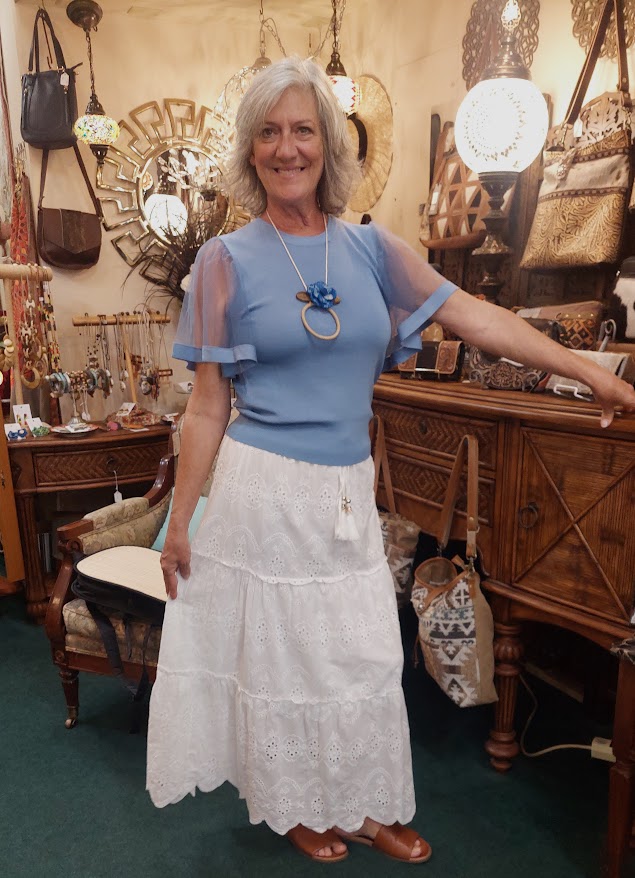
New things trickle in daily so there’s always a new top or scarf, line of jewelry or handbag to see that wasn’t here the week before.  Because we as people vary widely in our looks and taste, our selection of styles and prices do too so hopefully everyone who walks through the door can find something they like here.

We carry clothing from Scared Threads, Dance in Paris, Gretchen Scott, Habitat, Before You, Young Threads, True Blue, Kiki Sol and many more.  You’ll see jewelry from Firefly, Mosaico, Leightworks, Artista, Tagua, Sunflower Leather to name a few.  Handbags from Myra, Mary Frances, ILI NY, Challa & coming very soon Vendula London.

We have a very small Men’s Department and a wonderful Artisan’s Corner with locally handmade pieces.


MOZI  Magic Flow Bracelet a.k.a. “arm slinkies” –  a set of carefully crafted rings which, when set in motion, mystically come to life, spinning in a gyroscopic display of dark glowing, color, and movement that’s as fun as it is beautiful. We have 4 fun colors – blue, glow-in-the-dark pink and yellow, and iridescent – $10 each  The glow-in-the-dark bracelets are called “Glozi ”

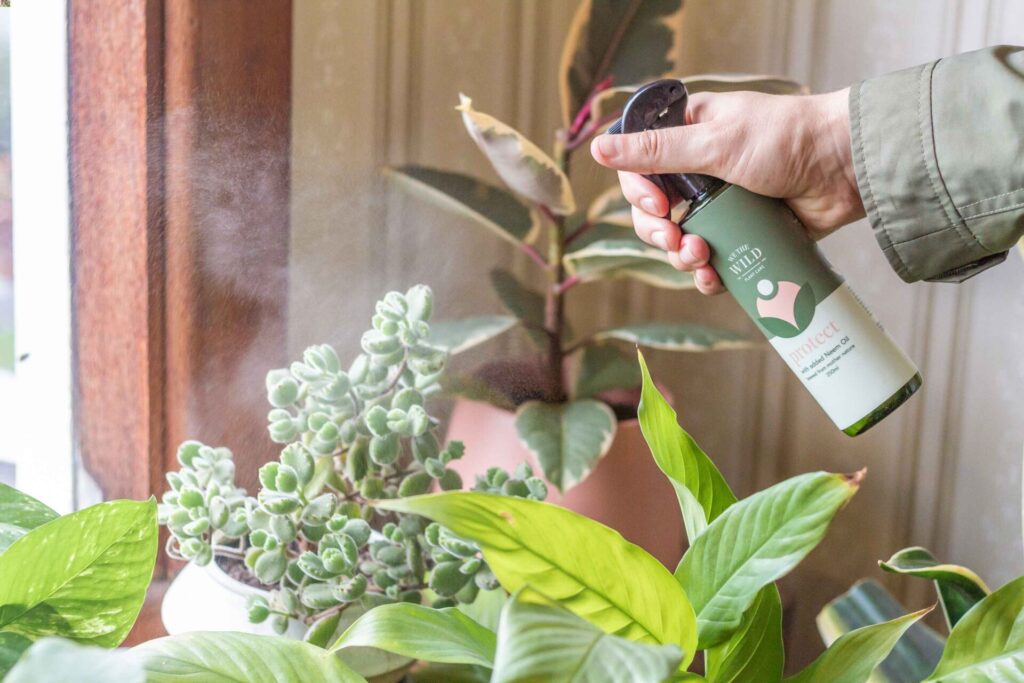
House plants frequently become a bit down around us because they were not designed to live in containers. To make matters worse, we often use products that harm the environment and our plants like granules of fertilizer covered in plastic. synthetic plant food with an ammonia basis. insecticides made of petroleum and overspray from household cleaners.

Since we now carry a lot more house plants than we ever did in the past, we decided investing in something to help you be more successful with them, was a good idea.  So that’s where “We the Wild” comes in.  They work with some of the brightest biochemists to build products that work better for your plants, and the environment. From home trials, to lab based experiments, they’ve donned the white coat and created formulas that are squeaky clean and designed to get plants humming on their own. They feed their earthworms bat guano, kelp, tree clippings, fish aminos, alfalfa, rain water, fulvic & humic acids as well as poultry litter & butcher’s wastes.  The worms castings are a vital ingredient in their products, designed for fast absorption and packed with a complex mix of microbes for vigorous growth. By replicating mother nature, you’re working with the natural instincts rather than against them to promote root strength and thus healthy plants.

We are starting with their “Grow” concentrate which makes up to 62 gallons from 8 ounces and “Protect”, an Australian inspired formula which includes Neem Oil to polish & protect your healthy leaves from pests.  Just another something cool from The Grumbles House.


b


You’ll always find a nice selection of books, especially children’s books, at Grumbles House.  We aim to educate, inspire and encourage through our book offerings. We think books are great gifts for little people; something to share cozy days & nights cuddled up with, to keep and cherish.


If You Love ComplimentsYou‘ll Love Our Jewelry! Beautiful, Handmade Pendants & Earrings. Fine Art That You Can Wear! Picking Out Just One Is The Worst, But Wearing It Is The Best! Leight Works is made with unique crystal and sterling silver designs. Each piece is cut into a custom shape and polished, then layered with thin precious metals inside which make the stones glow from within. This color technology, developed by NASA, in combination with our crystal designs produces a beautiful prismatic glow of color on your skin. It glows in the daylight; changes color with movement, and even reflects the colors of your outfit. Leight Works crystal pieces are set in sterling silver and the color is layered inside meaning it will never fade; they’re also durable, waterproof, and easy to clean. Each piece is designed for adventure; bringing light and color, original style, simple elegance, and fantastic eye-catching quality to all who wear them.